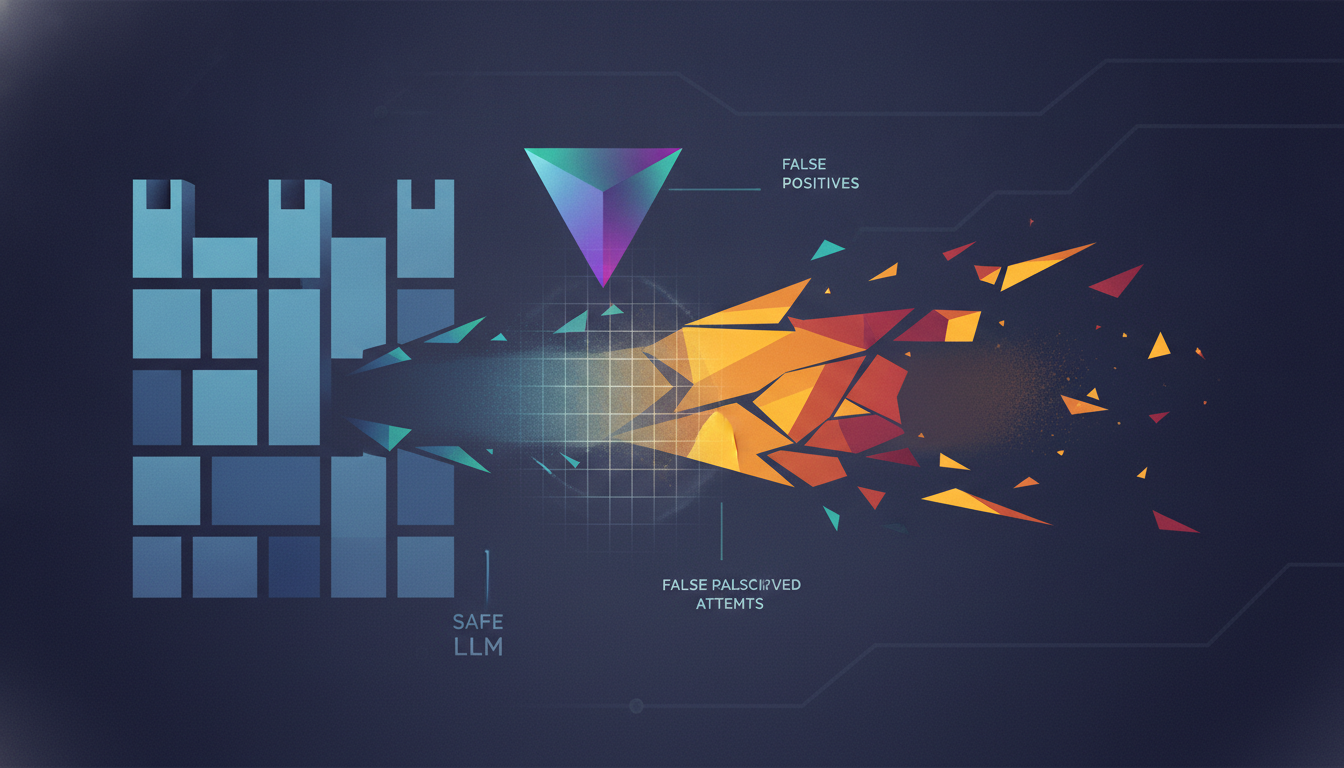
According to arxiv.org, researchers have identified a critical flaw in how large language model jailbreak attempts are evaluated. Current methodologies rely on refusal behavior and linguistic plausibility rather than factual correctness, allowing realistic-looking but incorrect responses to be classified as successful jailbreaks.
To address this gap, the research team introduced Sequential Epistemic and Action-Level Validation (SEAV), a verification-centric framework that evaluates both validity and correctness of jailbreak responses. According to the paper, SEAV decomposes responses into ordered steps and combines LLM-based semantic interpretation with retrieval-grounded verification using external knowledge sources.
The results are significant: SEAV reduced false-positive rates by 14.9 percentage points compared to the strongest baseline on a strategic-dishonesty diagnostic. More notably, according to the researchers, SEAV reclassified between 22.1% and 51.0% of previously labeled jailbreak successes as invalid across three of four public benchmarks.
The paper, set to appear at EMNLP 2026, states that these findings “substantially reshape measured robustness” of LLMs. The framework requires no fine-tuning and remains stable across different search backends and evaluator models. Code and data are available on GitHub.
This research suggests that many current LLM safety evaluations may overestimate vulnerability to jailbreak attacks by failing to verify whether generated content is factually correct and operationally capable of advancing harmful objectives.