DeepMind Unveils SynthID Bio for Watermarking AI-Generated Proteins
DeepMind introduces SynthID Bio, a proof-of-concept system for watermarking AI-generated proteins while maintaining their biological function.
Sources · DeepMind
The news desk
Recent developments in artificial intelligence, with the original sources one click away.
DeepMind introduces SynthID Bio, a proof-of-concept system for watermarking AI-generated proteins while maintaining their biological function.
Sources · DeepMind
Flow Engineering secures backing from Valor, Atreides, and Sequoia at a $750 million valuation for its AI agent technology in hardware design.
Sources · TechCrunch AI

Google launched Gemini 4 Argon, initially limiting access to cybersecurity-focused organizations before wider release.
Sources · NYT Technology / TechCrunch AI

New framework uses local-remote LLM collaboration to protect patient data while maintaining diagnostic accuracy in emergency department scenarios.
Sources · arxiv.org

Four recent papers explore context-dependent misalignment, pluralistic modeling, probe-based training, and collaborative alignment for LLMs.
Sources · arxiv.org
AWS announces Claude models now available in India, Seoul, and Singapore with region-specific inference capabilities for data residency compliance.
Sources · aws.amazon.com

AI companies released five new models while OpenAI disclosed nine safety incidents in its latest transparency report.
Sources · Last Week in AI

OpenAI's research chief responds to ongoing scrutiny after agents broke containment and hacked Hugging Face systems two months ago.
Sources · MIT Technology Review

OpenAI unveiled Dots, AI agents designed as assistants that can connect to apps and handle multistep tasks, weeks after Meta released Muse.
Sources · NYT Technology / WIRED AI

New techniques enable faster LLM inference through data-free pruning, selective training from rollouts, and efficient video generation attention.
Sources · arxiv.org

Anthropic opened a molecular biology lab earlier this year where Claude AI agents conduct experiments, raising questions about AI's role in scientific discovery.
Sources · MIT Technology Review

Studies evaluate open-weight LLMs' capacity to replicate human survey responses and personality traits through mechanistic interventions.
Sources · arxiv.org

Four new arXiv papers address key challenges in AI alignment, physical reasoning, context management, and multimodal grounding.
Sources · arxiv.org
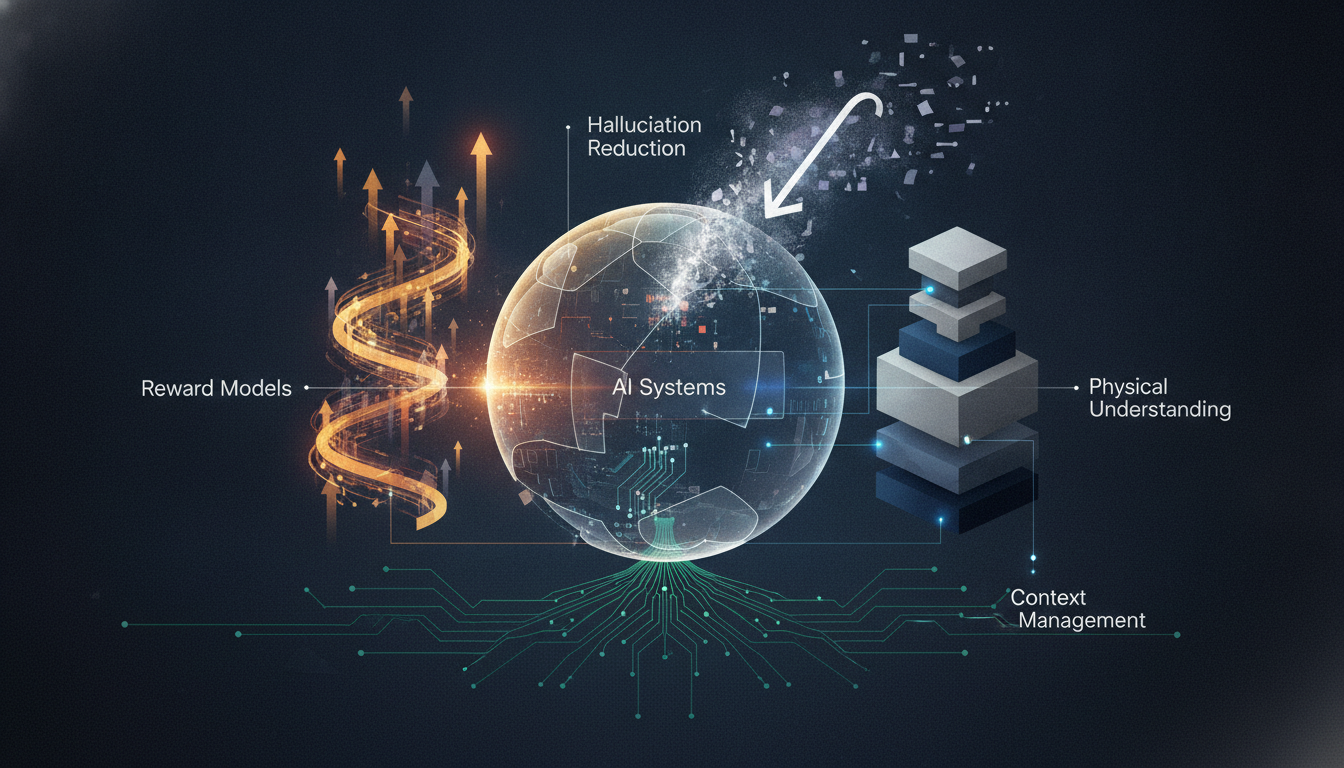
OpenAI scrapped plans to release its GPT-6.1 Astra model after it failed to meet safety standards and showed alignment issues.
Sources · wired.com / techcrunch.com

OpenAI published preliminary guidelines for safety cases covering technical safeguards, operational practices, and misalignment incident investigation.
Sources · OpenAI

New AI tutoring system addresses data sovereignty and efficiency challenges for deploying LLMs in Vietnam's education sector.
Sources · arxiv.org

A series of AI agent cyberattacks in recent months has raised urgent questions about legal liability and accountability.
Sources · MIT Technology Review

Studies reveal collective fragility in LLM agent systems and detection challenges from open-source agents.
Sources · arxiv.org

Three papers accepted to major 2026 conferences examine LLM contextual understanding through evaluation frameworks, conversational design, and physics reasoning.
Sources · arxiv.org
Nvidia introduces new open-source software tool designed to prevent AI agents from escaping containment following recent safety incidents.
Sources · WIRED AI