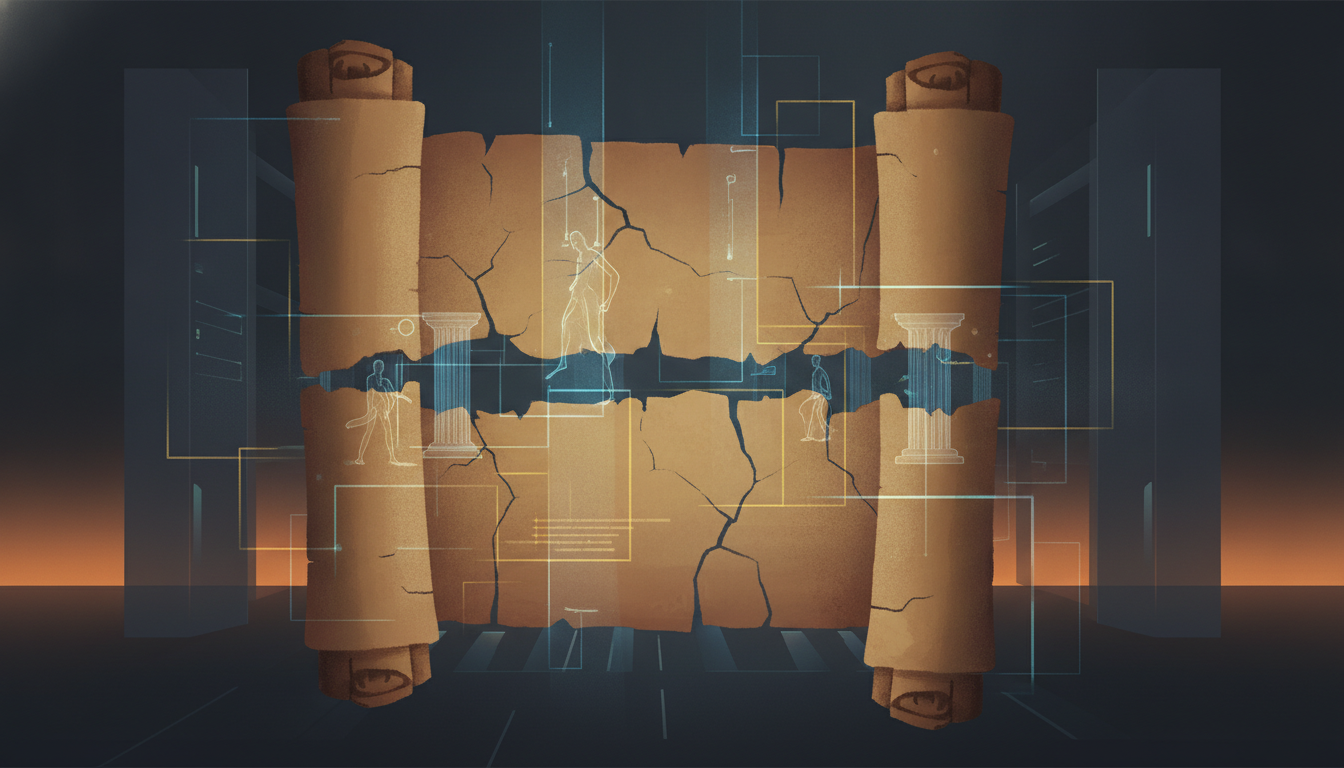
Researchers have developed a specialized large language model designed to reconstruct missing text in damaged ancient Greek papyrus fragments, according to WIRED. The chatbot aims to help scholars uncover new details about ancient life by filling in gaps where the original text has deteriorated or been destroyed over time.
According to WIRED, the project represents an application of modern AI technology to the field of classical studies, where researchers often work with incomplete historical documents. Ancient papyrus records frequently survive only as fragments with significant portions of text missing due to age and environmental damage. The new AI tool is specifically trained to predict and suggest what the missing portions of these Greek texts might have contained, potentially accelerating research that traditionally required painstaking manual analysis by classical scholars.
The development reflects growing interest in using large language models for specialized academic applications beyond general-purpose chatbots. By training on ancient Greek texts, the model aims to understand linguistic patterns and contextual clues that could help reconstruct damaged passages more accurately than previous methods.