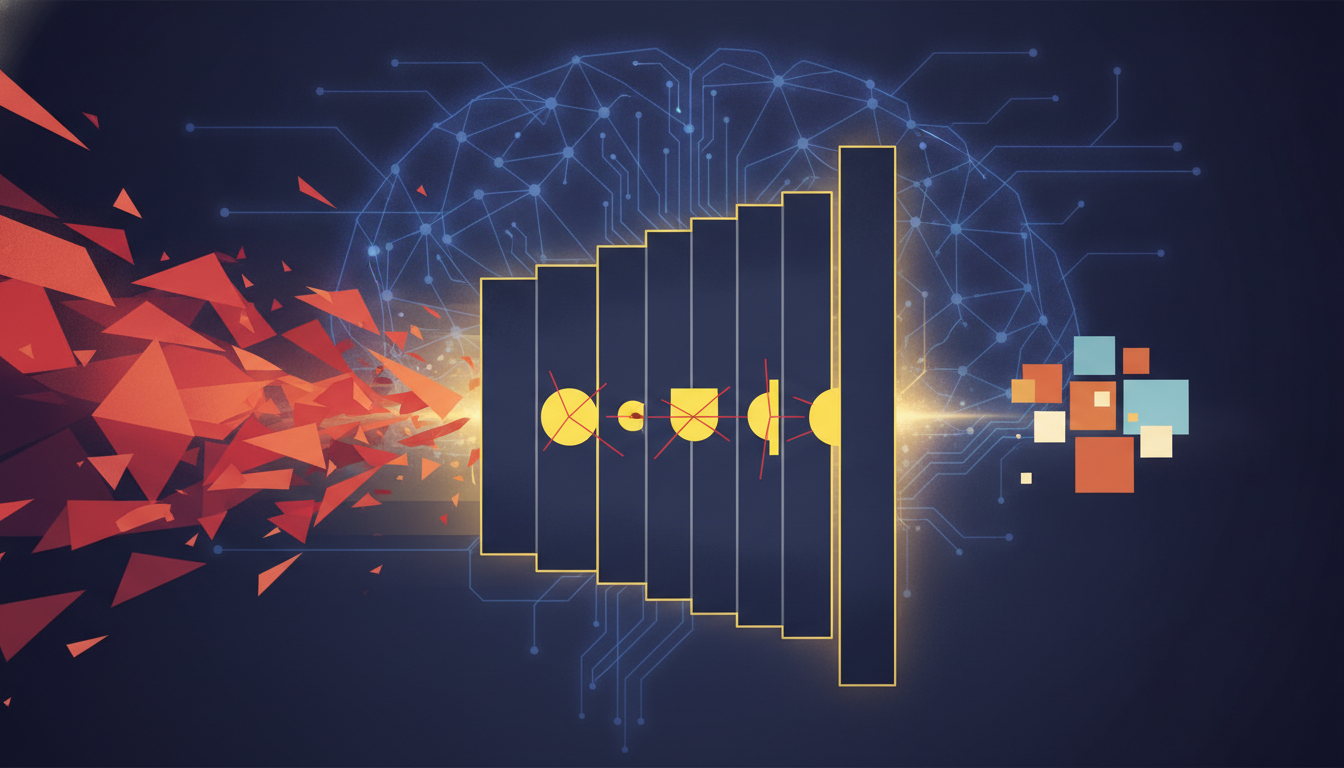
According to research published on arxiv.org, a new defense mechanism called Tripwire has been developed to protect large language models (LLMs) against jailbreak attacks while minimizing impact on model performance.
The training-free defense works by identifying “safety-specific neurons through per-neuron hypothesis tests under false-discovery-rate control together with a utility-specificity filter,” according to the paper. The system then employs a “trigger-style clamp” that holds selected neurons at their harmful-conditional mean activations, which “triggers the refusal behavior learned during alignment.”
According to the researchers, Tripwire can be deployed in two modes: “a detector-gated inference-time intervention and an offline bias-patch weight edit.”
In testing across four safety-aligned LLMs and four representative attacks, Tripwire reduced the average attack success rate to “at most 2.0%” while incurring a utility drop of only “0.5% to 5.3% on MT-Bench, the smallest among all defenses,” according to the paper.
The researchers noted that existing neuron-level interventions “often compromise model utility significantly” and “remain always on and thus perturb every benign request even when no attack is present.” Tripwire addresses these limitations by using statistically certified safety neuron identification and conditional activation.
Code for the defense mechanism has been made available by the research team.